
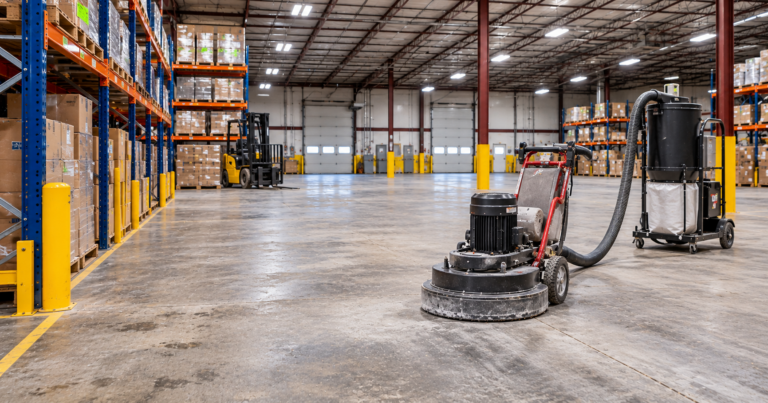
Clearing a service bay or warehouse floor for coating work takes coordination. Before installation, Huntsville facility managers need a plan for inventory, staff access, and downtime. Use this checklist to prepare for the walkthrough, then follow the installer’s instructions for your selected floor system.
At Rocket City Epoxy, we help North Alabama businesses plan commercial flooring projects. The walkthrough is the time to discuss surface preparation, operational constraints, and the expected installation schedule.
Confirm responsibilities and timing in writing before moving inventory or interrupting operations. This general checklist does not replace your project’s preparation instructions.
The Quick Pre-Install Game Plan
If you are short on time before your scheduled installation date, focus on these four operational priorities to keep your project moving:
- Clear the agreed work area: Confirm which vehicles, tools, and inventory must be relocated and how fixed equipment will be handled.
- Confirm environmental requirements: Ask the installer about temperature, ventilation, moisture, and any active leaks before work begins.
- Report spills and damage: Identify contamination and damaged joints during the walkthrough. Handle spills under your facility safety procedures and the relevant safety data sheets.
- Restrict the work zone: Brief shift supervisors and establish barriers while maintaining required emergency access and exits.
Clearing the Floor Footprint and Managing Inventory
Confirm which areas must be cleared and how permanent lifts, racks, and other fixed equipment will be handled. Do not disconnect or move anchored equipment without an agreed plan and qualified help.
- Relocate rolling stock and vehicles: Move all forklifts, scissor lifts, customer vehicles, and diagnostic carts off the concrete. Park them in an outside lot or an unscheduled wing of the building.
- Clear racking as directed: Agree on inventory removal and access around fixed rack bases during the walkthrough; the required space depends on the equipment and work scope.
- Lift floor-mounted cords and hoses: Reel up air lines, extension cords, and drop lights so they do not hang onto the floor or tangle in walk-behind machines.
- Mark permanent fixtures: Point out floor drains, trench grates, and safety bollards that need tape masking or clean termination cuts.
Securing Utilities and Environmental Controls
Environmental and slab conditions affect the selection and installation of commercial epoxy flooring. Confirm temperature, humidity, ventilation, and moisture requirements for the proposed system.
Stabilizing Interior Climate and Airflow
Ask the installer what conditions must be maintained before, during, and after application. Explain whether the building is climate-controlled and identify any limitations. Do not change ventilation or HVAC settings without coordinating the project requirements.
Confirming Power Access and Water Shutoffs
Confirm electrical requirements and authorized access with the installer and your facility team. Equipment needs vary. Report leaks, washdown operations, and condensate drains so qualified personnel can plan how to keep the work area dry without disabling essential systems.
Addressing Surface Contaminants and Slab Conditions
Oil and other contaminants can penetrate concrete. Surface preparation and coating selection must account for the actual slab condition; grinding alone may not resolve deep contamination. AMPP explains concrete surface preparation and coating selection as related parts of the process.
- Address spills safely: Follow the relevant safety data sheets and facility spill procedures. Tell the installer what was spilled and what cleanup products were used; do not mix chemicals or use generic absorbents for an unknown spill.
- Flag chemical exposure zones: Identify battery charging, parts washing, and chemical storage areas. Chemical contamination and moisture vapor are different issues and need separate evaluation.
- Note damaged joints and cracks: Point out areas where heavy forklift traffic has broken down concrete control joints or where old floor patches have popped loose.
Coordinating Staff Access and Safety Perimeters
Once surface prep begins, the coated section becomes a restricted construction zone. Protecting your staff and preventing accidental footprints in wet resin takes clear communication across every shift.
- Set up physical barriers: Place caution tape, cones, or temporary partitions at all pedestrian doors and bay entrances leading into the work area.
- Brief all shift supervisors: Tell night crews, delivery drivers, and maintenance staff that the floor is off-limits until our lead installer officially clears the space.
- Plan alternative walkways: Reroute foot traffic to restrooms, breakrooms, and front offices so employees never have to cross the active work zone.
- Arrange early building access: Provide temporary alarm codes or have a manager unlock the doors early if our crew is scheduled for a pre-dawn start.
Ask whether phased warehouse flooring work is feasible. Continuing operations depends on safe separation, ventilation, access, and the coating system, not simply dividing the floor into zones.
Local Flooring Performance Built for Huntsville Operations
Review our recent work and discuss the demands of your facility, including vehicle loads, chemicals, cleaning routines, and wet areas. Confirm the proposed system, maintenance requirements, and schedule before installation.

What Huntsville Facility Managers Ask Before Installation Day
Before locking in your project dates, review these answers to the most common operational questions we hear from warehouse managers and auto shop owners.
1. Do we need to pressure wash or degrease the concrete before your crew arrives?
Do not pressure wash, degrease, or apply cleaning products before checking your installer’s preparation instructions. Tell the team about existing contamination and previous treatments so they can specify an appropriate preparation method.
2. How long must vehicles and forklifts stay off the new floor?
Ask for written return-to-service times for walking, vehicles, forklifts, and chemical exposure. Timing depends on the selected system and actual curing conditions. Keep each type of traffic off the floor until the installer authorizes it.
3. Can our business stay open while you install the floor?
Possibly, depending on the layout and work plan. Discuss ventilation, dust controls, barriers, emergency routes, and separation from occupied areas before deciding whether adjacent operations can continue.
4. What happens if our concrete has deep cracks or damaged control joints?
Have the installer assess cracks, joints, and previous repairs before choosing the treatment. Moving joints and structural problems may need different solutions; do not assume every gap should be filled or coated over.
5. Do you test the concrete for moisture before applying coatings?
Ask which moisture tests and acceptance criteria apply to your proposed coating system. Elevated results may require additional investigation, mitigation, a different system, or a schedule change. A primer is not a universal solution for every moisture problem.
6. Can you make the floor slip-resistant for wet auto bays?
Discuss traction, expected contaminants, drainage, footwear, and cleaning routines with the installer. A textured coating does not make a floor slip-proof or establish compliance by itself. OSHA walking-working surfaces information provides broader workplace safety context.
Ready to Schedule Your Facility Walkthrough?
A durable commercial floor starts with proper planning. At Rocket City Epoxy, we help you choose flooring solutions designed to withstand daily forklift traffic, dropped tools, and exposure to harsh automotive fluids.
Our team works with you to understand your facility’s needs, provide a clear quote, and plan an installation that minimizes disruptions to your business operations.
Ready to upgrade your facility’s flooring? Contact us today to schedule an on-site assessment and take the first step toward a stronger, longer-lasting floor.
