
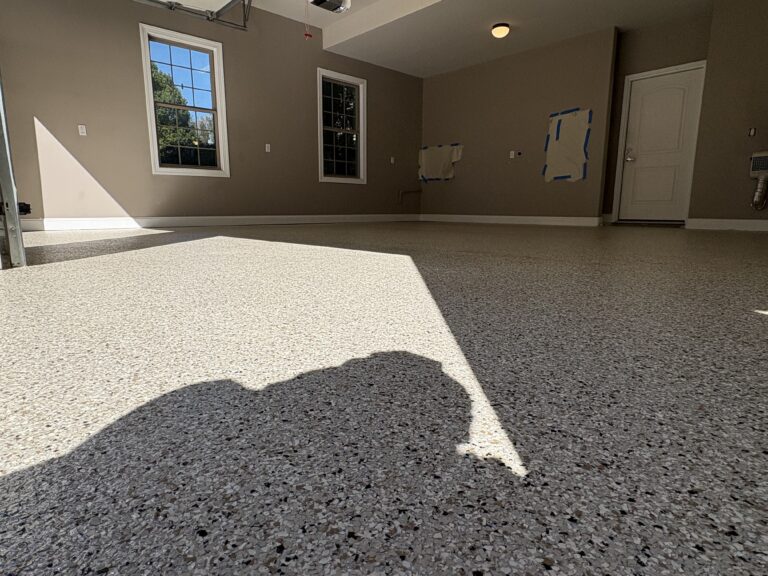
Alabama humidity is relentless, and your garage floor feels it every single season.
If you’ve ever searched for polyaspartic garage floors near me, you’ve likely seen options ranging from standard epoxy floor coating to decorative concrete stains. But when it comes to long-lasting, weather-resistant garage floors that can handle Alabama’s intense humidity, heat, and seasonal swings, nothing compares to polyaspartic.
At Rocket City Epoxy, we work with homeowners across Madison, Huntsville, and surrounding North Alabama communities where high humidity and heat create serious challenges for concrete surfaces. The wrong coating can blister, peel, discolor, or fail over time.
That is why we recommend advanced systems that deliver durability, moisture resistance, and long-term performance without compromise.
The Impact of Alabama’s Humidity on Garage Floors
In North Alabama, humidity is not just uncomfortable. It directly impacts concrete and coatings at the surface level. Concrete is naturally porous, which means it absorbs and releases moisture depending on temperature and environmental conditions. In places like Madison and Huntsville, where humidity levels often stay elevated for much of the year, moisture movement becomes a serious factor in floor coating performance.
When moisture vapor rises through a slab and meets a coating that cannot handle it, problems begin. You might see bubbling, peeling, or areas where the coating lifts from the surface. Even high-quality epoxy floors can struggle if the conditions are not ideal or if moisture levels are too high.
We see this often with older epoxy garage floor installations that were not designed for long-term exposure to Alabama’s climate. That is exactly why polyaspartic floors have become our preferred solution.
How Polyaspartic Floors Outperform Traditional Epoxy
Not all coatings are created equal. While epoxy floor coating has been a popular option for years, polyaspartic technology was developed to solve many of epoxy’s weaknesses, especially in demanding environments.
Faster Cure Time Means Less Risk
One of the biggest differences between epoxy garage floor systems and polyaspartic garage floors is cure time.
Epoxy coatings typically require extended curing periods. During that time, humidity and temperature swings can interfere with the chemical bonding process. In Alabama’s humid conditions, that extended exposure increases the risk of adhesion problems.
Polyaspartic coatings cure much faster. In many cases, we can complete a polyaspartic garage floor in a single day. Because the material sets quickly, there is far less opportunity for humidity to disrupt the bond between the coating and the concrete. That rapid cure window is a major advantage in our climate.
Better Moisture Tolerance
Moisture vapor transmission is one of the most common causes of garage floor coating failure. Epoxy floors can perform well when installed under controlled conditions, but they are more sensitive to moisture issues.
Polyaspartic floors are more forgiving. Their chemical structure allows them to bond tightly to properly prepared concrete while accommodating minor moisture movement. When installed correctly with professional surface preparation, polyaspartic systems dramatically reduce the risk of bubbling and peeling.
UV Stability That Prevents Yellowing
Another issue we see with epoxy floors is discoloration. If your garage door is open frequently or if sunlight reaches the surface, traditional epoxy can yellow over time.
Polyaspartic garage floors are UV stable. That means they resist fading and yellowing even with regular sun exposure. For homeowners who care about keeping their garage looking sharp and clean, this is a major benefit.
Flexibility for Temperature Changes
Concrete expands and contracts as temperatures change. In Alabama, we experience hot summers and cooler winters, which creates constant movement in the slab.
Epoxy garage floor systems are more rigid. Over time, that rigidity can lead to cracking or delamination under stress.
Polyaspartic floors offer greater flexibility. They move more naturally with the concrete, reducing the likelihood of stress fractures or coating separation.
The Real-World Benefits of Polyaspartic Garage Floors
Beyond the science, what does this mean for you as a homeowner?
Long-Term Durability
Polyaspartic floors are highly resistant to:
- Hot tire pickup
- Oil and chemical spills
- Road salts and moisture
- Impact from tools or equipment
That durability makes them ideal for active garages where vehicles, storage, and hobbies all share the same space.
Low Maintenance
Once installed, a polyaspartic garage floor is easy to maintain. The non-porous surface prevents stains from soaking in, and routine cleaning usually requires nothing more than sweeping and occasional mopping. Compared to bare concrete or failing epoxy floor coating systems, the difference is significant.
Clean, Professional Appearance
Polyaspartic garage floors can include decorative flake systems that create depth, texture, and slip resistance. Whether you prefer a solid color or a custom flake blend, the result is a clean, finished look that elevates your entire garage.
We help homeowners choose styles that complement their home’s design while ensuring the floor performs under real Alabama conditions.
When Should You Upgrade Your Garage Floor Coating?
If you are noticing any of the following, it may be time to consider replacing your current system:
- Peeling or bubbling epoxy floors
- Yellowing or discoloration
- Persistent concrete dust
- Stains that will not come out
- Cracks showing through the coating
Even if your existing epoxy garage floor looks fine now, upgrading to polyaspartic floors during a renovation or home improvement project can prevent future problems. Many homeowners choose to upgrade before listing their home, as a professionally coated garage floor improves overall presentation.
Our Proven Solution for Long-Lasting Garage Floors
We do not recommend products lightly. After years of installing both traditional epoxy floor coating systems and advanced polyaspartic floors, we have seen firsthand how each performs under real Alabama conditions. Humidity, heat, and constant slab moisture movement demand more than a basic epoxy garage floor. They require a system built specifically for durability.
For garages, polyaspartic garage floors consistently outperform standard epoxy floors. While epoxy floor coating remains a solid option in certain environments, it can be more sensitive to moisture and UV exposure. In contrast, professionally installed polyaspartic floors are designed to handle Alabama’s climate without sacrificing appearance or performance.
When we do our installation, our focus is long-term results. That means:
- Thorough mechanical surface preparation for maximum adhesion
- Moisture evaluation before coating application
- A durable base layer designed for impact resistance
- Decorative flake or solid color options for aesthetic flexibility
- A UV-stable topcoat that resists yellowing and wear
This process allows us to deliver stronger adhesion, better moisture tolerance, and longer-lasting protection compared to many traditional epoxy garage floor installations.
Professional Installation Makes the Difference
Even the most advanced coating system will fail if it is not installed correctly. Whether you choose epoxy floors or polyaspartic floors, surface preparation and application technique are what determine long-term success. In Alabama’s humid climate, precision matters even more.
We treat every garage floor coating project as a complete system, not just a product application. That distinction is critical.
Surface Preparation Is Everything
Concrete may look solid, but it is full of pores, small cracks, and contaminants. Oil stains, tire residue, and moisture trapped in the slab can prevent proper bonding if not addressed.
We use professional mechanical grinding equipment to properly profile the concrete surface. This creates the ideal texture for strong adhesion, whether we are installing an epoxy garage floor or a full polyaspartic garage floor system. Acid washing or light sanding simply is not enough for long-term performance.
Moisture Testing and Evaluation
Because humidity plays such a major role in coating performance, we evaluate slab conditions before applying any epoxy floor coating or polyaspartic system. Ignoring moisture levels is one of the most common reasons garage floor coatings fail prematurely.
By identifying potential issues early, we can recommend the best system for your specific slab conditions. In many Alabama garages, that recommendation is polyaspartic floors because of their superior moisture tolerance and flexibility.
Is Polyaspartic the Right Choice for Your Garage?
For most homeowners in North Alabama, the answer is yes. If your garage is exposed to humidity, temperature swings, vehicle traffic, or occasional chemical spills, polyaspartic floors offer a stronger and more reliable solution than many traditional epoxy garage floor systems. While epoxy floor coating can perform well in controlled environments, Alabama’s climate often demands greater flexibility, moisture tolerance, and UV resistance. We evaluate your concrete condition, garage usage, and long-term goals to determine whether a polyaspartic garage floor coating is the best fit, but in humid conditions like ours, it is typically the smarter long-term investment.
Best Practices for Garage Floor Coating Maintenance
Once your new garage floor coating is installed, protecting your investment is simple. Both epoxy floor coating systems and polyaspartic floors are designed to be low maintenance, but a few consistent habits will help your garage floor look better and last longer, especially in Alabama’s humid climate.
- Simple Cleaning for Long-Term Performance
Regular sweeping removes dirt and grit that can wear down the surface over time. For deeper cleaning, use a mild detergent and warm water. Both epoxy floors and polyaspartic garage floors resist stains, but wiping up oil, water, or chemical spills promptly helps preserve the finish and prevent buildup.
- Protect the Surface From Unnecessary Wear
Polyaspartic garage floors and epoxy garage floor systems are built for durability, but small preventative steps go a long way. Avoid dragging sharp metal objects across the surface, and use protective pads under heavy tool chests or equipment. In Alabama’s humid climate, minimizing standing water after heavy rain also helps maintain long-term performance.
With basic care, a professionally installed garage floor coating can maintain its appearance and strength for many years.
Common Questions About Polyaspartic Garage Floors
1. How long do polyaspartic garage floors last?
Polyaspartic garage floors are designed for long-term durability. When professionally installed and properly maintained, they can last well over a decade in Alabama’s humid climate. Their strong bond to concrete, flexibility, and resistance to moisture and UV exposure allow them to maintain both performance and appearance for years. Longevity depends on proper surface preparation and routine care, but polyaspartic garage floor coating systems are built to handle heavy use and challenging conditions.
2. How long does a polyaspartic garage floor installation take?
One of the biggest advantages of polyaspartic floors is their rapid cure time. Most polyaspartic garage floor coating systems can be installed in a single day. In many cases, homeowners can walk on the surface within hours and return vehicles to the garage shortly after. This quick turnaround minimizes disruption while still delivering a durable, professional finish.
3. Can polyaspartic floors handle Alabama humidity?
Yes. Polyaspartic floors are well suited for high-humidity environments like North Alabama. Concrete naturally absorbs and releases moisture, especially during hot and humid months. Polyaspartic garage floors are formulated to bond strongly to properly prepared concrete while tolerating minor moisture movement. This makes them a reliable garage floor coating option for garages exposed to seasonal humidity and temperature changes.
4. Are polyaspartic garage floors resistant to stains and chemicals?
Polyaspartic garage floors create a non-porous, sealed surface that resists common garage spills such as oil, gasoline, and household chemicals. Because the coating prevents liquids from soaking into the concrete, cleanup is simple and stains are less likely to form. This protective barrier helps keep your garage looking clean and well maintained over time.
5. Are polyaspartic floors slippery?
Polyaspartic garage floor coating systems can be customized with decorative flakes and traction additives to enhance slip resistance. This is especially helpful in Alabama, where rain and humidity can introduce moisture into the garage. With the right texture and finish, polyaspartic floors provide a balance of smooth appearance and practical traction for everyday use.
If you have additional questions about polyaspartic garage floors or want to know whether this system is right for your home, a professional evaluation can provide clear guidance based on your specific garage conditions.
Key Insights That Show the Advantage of Polyaspartic Garage Floors
✓ Built to handle Alabama humidity with strong adhesion and moisture-tolerant performance.
✓ Fast, efficient installation thanks to rapid cure times that reduce downtime.
✓ UV-stable finish that resists yellowing and maintains its appearance over time.
✓ Durable, low-maintenance surface designed for vehicles, heavy storage, and everyday garage use.
If you are ready to upgrade to a garage floor coating designed for long-term performance in Alabama’s climate, contact us today to schedule your consultation and transform your garage with a professionally installed polyaspartic floor built to last.
