
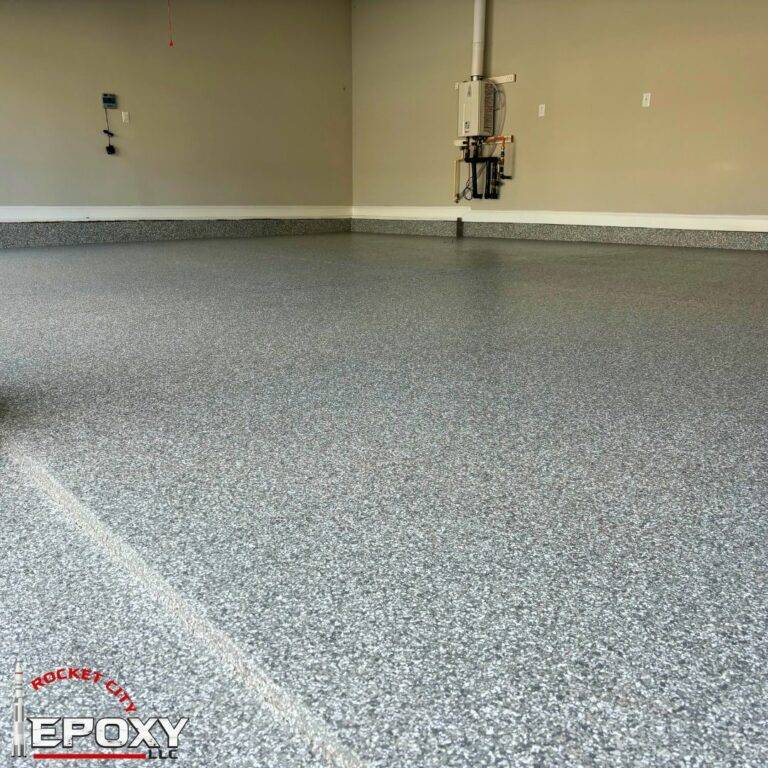
A garage floor in Huntsville has to handle more than parked cars and the occasional dropped tool. Heat, humidity, rain, tracked-in dirt, vehicle fluids, and changing temperatures can all affect how concrete and its coating perform over time.
Choosing the right coating system is therefore about more than searching for garage floor coating near me and selecting the first option you find. The coating should fit the condition of the concrete, how the space is used, and the level of exposure the floor receives.
At Rocket City Epoxy, we install professional floor coating systems for homes and businesses throughout Huntsville and surrounding North Alabama communities. We work with epoxy and polyaspartic systems to provide options suited to different concrete surfaces and applications.
This guide compares polyaspartic, epoxy, and other common garage floor options. It explains the practical differences between these systems so Huntsville property owners can make a more informed choice for their concrete floors.
Huntsville's Climate Changes What a Garage Floor Needs
North Alabama experiences hot summers, regular rainfall, humidity, and seasonal temperature changes. Garage floors may also be exposed to sunlight when the door is open, along with water, mud, vehicle fluids, and abrasive dirt carried inside by tires.
These conditions make durability only one part of choosing a garage floor coating. Adhesion, UV stability, chemical resistance, curing characteristics, surface preparation, and maintenance requirements can all influence how well a coating performs over time.
Whether the garage is near downtown Huntsville or in surrounding communities such as Madison or Meridianville, the goal remains the same. The coating system should protect the concrete while matching the environment, condition of the floor, and expected use of the space.
Temperature and Moisture Affect the Concrete
Concrete is porous, which means moisture conditions should be considered before a coating is installed. Proper evaluation can help identify surface conditions that may affect how well the coating bonds to the concrete.
Temperature can also influence application and curing conditions. These factors make proper product selection and installation procedures important rather than treating every garage floor coating as interchangeable.
Sunlight and Daily Use Add More Demands
Garage floors experience more than changing weather conditions. Open garage doors can expose parts of the floor to sunlight, while vehicles can bring in water, dirt, and debris that create additional wear on the surface.
Vehicle fluids, repeated foot and tire traffic, and routine cleaning can also affect a coated floor over time. Considering these everyday conditions helps determine whether epoxy, polyaspartic, or another coating option is better suited to the garage.
Polyaspartic Floors for Huntsville Garages
Polyaspartic is a high-performance coating technology known for rapid curing, UV resistance, chemical resistance, abrasion resistance, and a seamless finish. These characteristics can be especially useful for garage environments that experience regular vehicle traffic and changing conditions.
For Huntsville garages, polyaspartic floors can handle several practical demands in one coating system. Sunlight, tires, spills, dirt, and routine wear can all influence how a garage floor performs and maintains its appearance over time.
Our polyaspartic flooring systems are available for residential and commercial environments, including garages, warehouses, labs, schools, churches, kitchens, and offices.
Faster Curing With Less Downtime
One of the main differences between polyaspartic and traditional epoxy systems is curing speed. Professional polyaspartic products are designed for rapid curing, which can allow the coated surface to return to service sooner.
For homeowners, faster curing can mean less time with the garage unavailable. For businesses considering a commercial garage floor coating, reduced downtime can be especially important when the space supports daily operations.
Fast curing does not remove the need for proper preparation. The concrete still needs to be evaluated and prepared before the coating is applied according to the requirements of the flooring system.
UV, Chemical, and Abrasion Resistance
Garages are not completely protected from sunlight. An open garage door can expose sections of the floor to UV radiation, while vehicles can introduce oil, automotive fluids, dirt, cleaners, and other substances.
UV-resistant systems can help maintain their appearance under sunlight exposure, making polyaspartic garage floors particularly relevant when color stability is a priority. Chemical and abrasion resistance can also provide added protection against common garage conditions.
Sika, a global construction materials manufacturer, identifies UV resistance, fast curing, chemical resistance, and mechanical resistance among the characteristics of its professional polyaspartic flooring products. Spills should still be cleaned promptly to help maintain the coated surface.
Epoxy Garage Floor Systems for Huntsville Homes
Epoxy has been used for residential and commercial flooring for decades. When installed over properly prepared concrete, it can create a durable, seamless surface with a more finished appearance than bare concrete.
A professionally installed epoxy garage floor can provide resistance to stains, wear, and normal garage activity. Epoxy systems also offer flexibility in colors, decorative flakes, and other finish choices.
Our epoxy flooring options are used in residential and commercial settings throughout the Huntsville area, making epoxy another coating option worth considering based on the needs of the space.
Design Flexibility for Different Spaces
Epoxy can accommodate different colors, decorative flakes, and finish combinations. This flexibility allows the coating to provide practical floor protection while also changing the overall appearance of a garage.
Homeowners can explore our available floor finish options to compare flake combinations and consider how different finishes may complement their garage.
Epoxy also extends beyond residential applications. Properly specified commercial epoxy floors can be used in warehouses, offices, kitchens, schools, labs, and other facilities where durable, seamless, and cleanable surfaces are useful.
Cure Time and Project Requirements
Traditional epoxy generally requires more curing time than fast-curing polyaspartic systems. The exact timeline depends on the products used, installation conditions, concrete surface, and complete coating system.
For a residential garage where a longer curing period can be accommodated, epoxy may remain a practical option. Project requirements, expected use, appearance, and installation conditions should all be considered when selecting a system.
For commercial spaces where minimizing downtime is important, the faster curing characteristics of polyaspartic may be worth considering. This difference is one reason the coating should be selected according to the needs of the individual project rather than treating epoxy and polyaspartic as interchangeable.
Polyaspartic vs. Epoxy: The Practical Differences
Polyaspartic and epoxy each offer useful characteristics for garage flooring. The right choice depends on more than the coating name, as the complete flooring system, concrete condition, surface preparation, installation conditions, and intended use can all influence performance.
For Huntsville garages, factors such as sunlight exposure, expected traffic, spills, appearance, and available curing time can help determine which system fits the project.
- Cure speed: Polyaspartic coatings are known for rapid curing, which can allow for a faster return to service.
- UV stability: Polyaspartic technology can provide excellent UV resistance, making it useful for garage areas that receive regular sunlight.
- Chemical resistance: Properly specified epoxy and polyaspartic systems can both provide chemical resistance, although the level depends on the specific product and coating system.
- Appearance: Both systems can create attractive, seamless floors and incorporate decorative elements such as color flakes.
- Installation: Both epoxy and polyaspartic systems depend on proper concrete preparation to support adhesion and long-term performance.
For homeowners prioritizing UV resistance and faster turnaround, polyaspartic offers characteristics worth considering. Epoxy provides another durable and versatile option when its finish, curing requirements, and performance characteristics align with the needs of the garage.
Other Garage Floor Options Worth Understanding
Professional coatings are not the only options for a concrete garage floor. Paint, interlocking tiles, garage mats, and sealed or polished concrete can also be considered depending on the space and its intended use.
Garage floor paint offers a simple way to change the appearance of concrete, but it differs from a professional resin flooring system in thickness, adhesion, and expected performance.
Interlocking tiles create a modular surface and allow individual tiles to be replaced when needed. Unlike epoxy or polyaspartic coatings, they have seams between each section.
Garage mats provide temporary coverage for selected areas, while sealed or polished concrete offers a finished appearance without the same coating build or decorative flake system.
The right option depends on priorities such as appearance, coverage, durability, UV exposure, maintenance, and how the garage will be used.
Surface Preparation Has a Major Role in Performance
A floor coating is only one part of a successful installation. The concrete beneath it must be properly prepared to create a suitable surface for the coating to bond.
Professional preparation may include mechanical grinding, cleaning, and repairing cracks or surface defects before the coating layers are installed. Our garage flooring process uses industrial diamond grinding to mechanically prepare the concrete rather than treating installation as a simple painting project.
The condition of the concrete also matters. Older floors may have cracks, stains, previous coatings, or surface contamination, while newer concrete still needs to be evaluated before coating.
For this reason, choosing between epoxy and polyaspartic should follow an assessment of the actual floor. A suitable system considers both the coating itself and the condition of the concrete underneath it.
Residential Garages and Commercial Floors Have Different Priorities
Residential garages and commercial floors can experience very different conditions. The right flooring system should account for how the space is used, what the surface is exposed to, and the level of daily activity.
For residential garages, important factors may include:
- Vehicle traffic from cars, motorcycles, or other household vehicles
- Storage needs for cabinets, tools, lawn equipment, and other items
- Spills and stains from vehicle fluids, cleaners, or household projects
- Sunlight exposure when garage doors remain open
- Appearance based on preferred colors, flakes, and finishes
For commercial floors, a commercial epoxy flooring company may consider:
- Traffic levels and the type of vehicles or equipment using the floor
- Chemical exposure from oils, cleaners, or other substances
- Cleaning requirements based on facility operations
- Slip resistance based on the environment and expected use
- Downtime available for preparation, installation, and curing
Our commercial flooring systems are designed for spaces such as garages, warehouses, labs, schools, churches, and offices.
A commercial epoxy floor coating may suit one facility, while a fast-curing polyaspartic system may be appropriate for another. For residential garages, the same principle applies: the flooring system should match the conditions, priorities, and everyday use of the space.
Local Experience Matters for Garage Floor Coatings
We serve homeowners and businesses throughout Huntsville and surrounding North Alabama communities. Our approach starts with understanding the condition of the concrete, how the space is used, and what the property owner expects from the finished floor.
Local experience also means being familiar with the conditions Huntsville garage floors regularly face, including heat, humidity, changing temperatures, vehicle traffic, and everyday wear. These factors help guide the preparation and flooring system selected for each project.
From surface preparation through the final coating, we focus on clear communication, careful workmanship, and a straightforward installation process. Our goal is to provide a finished floor that fits the space and the needs of the people using it.
Helpful Answers Before Choosing a Garage Floor System
1. Is polyaspartic the same as epoxy?
No. Polyaspartic and epoxy are different coating technologies. Both can create durable flooring systems, but they differ in curing and performance characteristics. Polyaspartic is particularly known for rapid curing and UV resistance, while epoxy is valued for durability, adhesion, and versatility.
2. How quickly can a polyaspartic garage floor be installed?
Polyaspartic products cure faster than conventional epoxy products. A complete polyaspartic system can often be installed in one day, although timing depends on the condition of the concrete, preparation and repairs, temperature, and the specific system being installed.
3. Can epoxy be used in commercial properties?
Yes. Epoxy flooring can be used in warehouses, offices, kitchens, schools, labs, garages, and other commercial facilities. The appropriate system depends on factors such as traffic, chemical exposure, cleaning requirements, substrate conditions, and daily operations.
4. Are polyaspartic floors difficult to maintain?
Polyaspartic floors have a seamless surface that makes routine maintenance relatively straightforward. Regular sweeping and appropriate cleaning can help remove dirt and everyday debris, while spills should be cleaned promptly to help maintain the surface.
5. Which coating is better for a sunny Huntsville garage?
UV-resistant polyaspartic systems are particularly useful when sunlight exposure and color stability are priorities. However, concrete condition, desired appearance, curing time, expected use, and other project requirements should also be considered when choosing a garage floor coating.
Key Points for Choosing Your Huntsville Climate-Ready Garage Floor
Choosing the right garage floor coating starts with understanding the conditions your concrete faces and selecting a system that fits the space, climate, and everyday use.
✓ Consider Huntsville’s climate: Heat, humidity, sunlight, moisture, and seasonal changes can influence coating selection and performance.
✓ Compare coating characteristics: Polyaspartic offers fast curing and UV resistance, while epoxy provides durability, versatility, and a seamless finish.
✓ Think about everyday use: Vehicle traffic, spills, sunlight exposure, cleaning needs, and downtime can help determine which system fits the space.
✓ Prioritize surface preparation: Proper concrete evaluation, preparation, and repairs provide an important foundation for a successful coating system.
✓ Choose for the specific space: Residential garages and commercial floors have different demands, so the coating system should reflect how the area will actually be used.
The best choice is a garage floor system that works with your concrete condition, Huntsville’s climate, and the demands of your space rather than relying on the coating name alone.
Ready to discuss your floor? Contact our team today to explore your garage coating options.
